Most people would freak at a 22 hour layover in a foreign country where leaving the airport requires you to obtain a visa. However, I had a blast!
Changi Airport is the BEST airport in the world, and I’m not just saying that. It has actually won “Best Airport in the World” for almost a decade straight! I arrived around 9pm Sunday night. Changi has transit hotels and lounges in every terminal so my first priority was finding one of the hotels and passing out. They charge by the hour to try to accommodate various flight schedules. I paid for 9 hours which ran be approximately $130USD. A little steeper than I would normally pay for a hotel but it was super nice! The only downside is I could not figure out how to adjust their thermostat so I kept waking up in a sweat. Singapore is so unbelievably humid and I sleep cold.
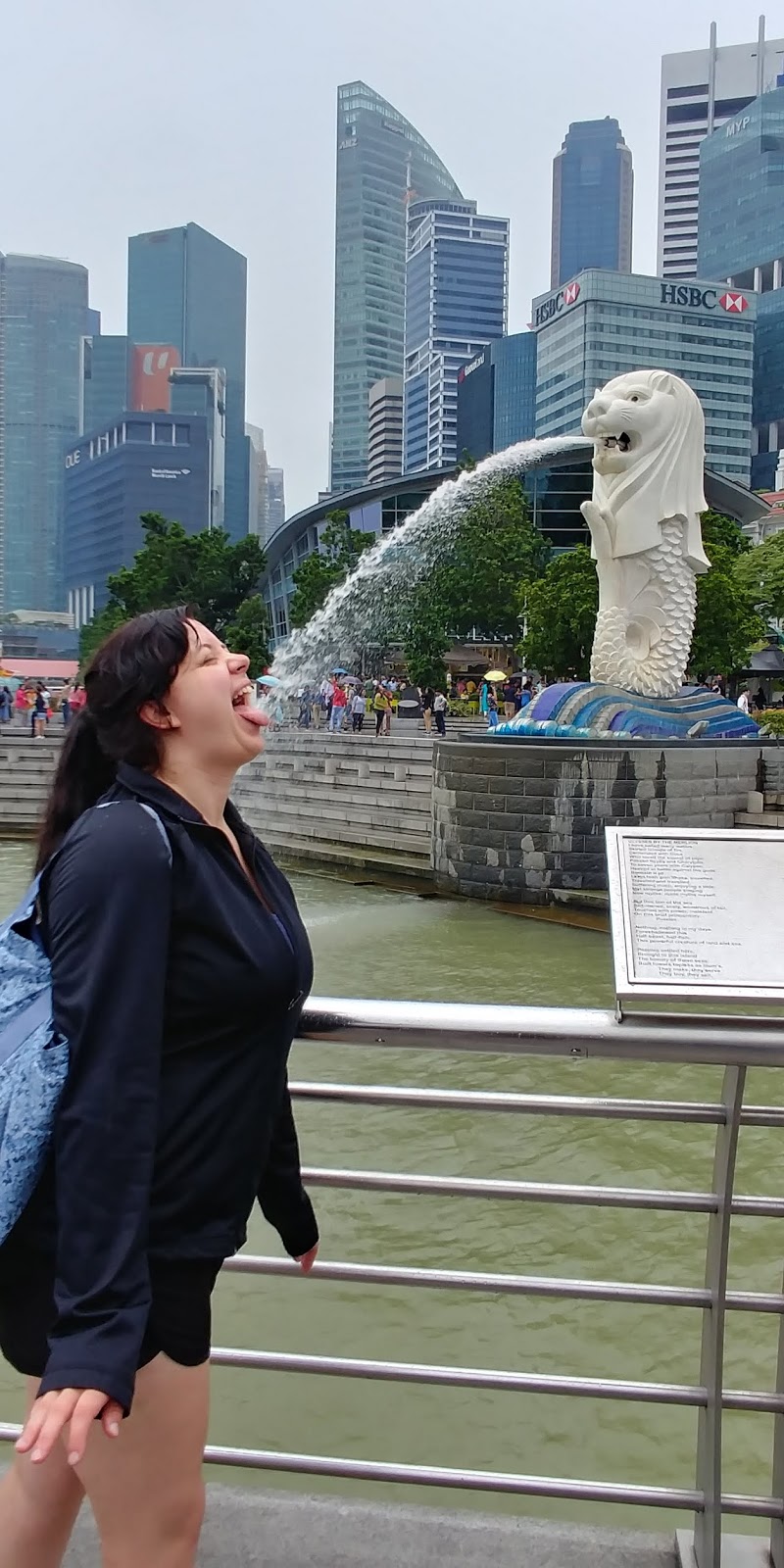
Anyways, woke up the next morning ready to explore. I had read about a free Singapore tour hosted by the airport that can be done without needing a visa so that was priority number 1. I found the registration booth, signed up and went and found some breakfast. The tour began at Merlion park where you get beautiful city views and of course get to take a picture with the infamous Merlion statue! We then drove through china town and little India and stopped in Maylay town where we got to see the beautiful mosque, wall art, and smell the delights of Ramadan festival foods. The night tours get to stop in the treetops garden, unfortunately the day tour does not, but I got to see a glimpse of it as we drove by.
Once I got back to the airport it was time for my own tour. My goal was to find and hit every garden. I hit all 3 of the main terminals but my all time favorite was the butterfly garden in terminal 3. I have never seen so many butterflies in my life!!
Singapore is known for being high end. People there fancy the “nice things” so Changi Airport is like a massive mall and all the shops are high end designers. But I’m not nor have I ever been interested in that kind of shopping. I found Singapore shops because I was in search of culture. Batik is the traditional garb of Singapore. Batik is the art of creating beautiful and intricate patterns in rich dyes. The Singapore Airlines flight attendants wear Batik as their uniform and I thought they were absolutely gorgeous and I wanted one. I literally had to buy the biggest size they had because they are sized for tiny Asian bodies, not broad shouldered, tall Americans. At least it fits!
After a long day of exploring I bid farewell to Singapore. My return layover will be much shorter and won’t allow as much time to explore. I arrived in Kathmandu last night to some immediate culture shock as it is a vastly different corner of the world. The city is loud, dirty, and traffic is absolute nonsensical chaos. I knew all this going in but it doesn’t matter how much prep and research you put into it, nothing will really prepare you for your first time alone in a 3rd world country. After a spike in anxiety, I got some sleep and am ready to face it head on because underneath all that are smells of incense, curry, and a culture I have loved and adored for years without ever even being here. Today we head to the main Himalayan Glacier Office and relax in town before we head to Lukla tomorrow. I am excited for what awaits me.
No matter what your adventure, planning is important. However, when you are planning an expedition, it becomes critical! You have an ever changing to-do list, physical training, as well as other logistics to keep in mind.
Here are some tips you need to know to make sure you are checking off all the important preparation tasks for a big trip!
Step 1: (The Obvious) Book your trip!
Once you decide what you would like to do, book your trip before doing ANYTHING else, including booking your flight. Depending on your expedition will depend on availability of dates as well as available guide companies to book through. DO NOT just book the first company you look at. compare prices, compare dates, compare reviews, compare summit success rates, and most importantly, compare safety standards for crew and clientele. Some have the money and are willing to pay for the best of the best, which is great! However, others (including myself) have to think about budget and getting the best possible experience for the best available price.
For me personally, my first priority was climbing local. Not only does it support their local economy to climb local when you can, but you get a much more in-depth cultural experience learning about the country and culture! My second priority was safety, and third was price. These are all things to keep in mind when choosing who to book your expedition with. Below are just a couple of my personal favorites:
Third Rock Adventures: Local Nepali guide company recommended by Lonely Planet, Trip Advisor, Travel Channel, New York Times, and more. Local guides fluent in English, great safety standards, cheaper than western guide companies, and all the money you spend supports the struggling Nepali economy.
Eco-Africa Climbing: The best local agency in Tanzania. They pride themselves on ethical porter treatment, ensuring they all make a living wage (even before tips). They will teach you Swahili and ensure a safe climb up Kilimanjaro! Safaris are also available.
Summit Climb: Founded by famous climber and guide Dan Mazur. Variety of charity treks available, experienced guides, most affordable Everest climbing from a western company, wide variety of larger expeditions and climbs, well organized.
Step 2: Book your flight!
Once you book your trip, wait until you make your first payment and receive a confirmation email with all needed info regarding your expedition before booking your flight. Everyone always talks about how there are key windows to book the cheapest flight. This is more true for nationwide flights more-so than international flights. International flights tend to book much more quickly and have their ideal price window between 4-6 months in advance depending on the time of year. The trick is to start monitoring and follow flight prices as soon as you book your trip, and once everything is confirmed, then book your flight. There are now a variety of flight apps to help track prices and some work better than others. Google Flights is always a good start, however I found Hopper and Skyscanner found much cheaper flights.
Step 3: Training Schedule
Planning out a training schedule for workouts is critical. It is important to map out when and how you are going to workout and train. This will be ever changing however. Life happens. You may find you were more out of shape than you thought and it may take longer to re-establish a base line of fitness, or you may get sick and be out of commission for a week or two, or maybe you are just so exhausted from work you aren’t getting to train as much as you would like. Whatever happens, set and establish fitness goals at the beginning and just try to get as close to them as possible. You may get lucky and be able to stay on track, but if not, you have a guideline to help get you there.
Step 4: To-Do lists everywhere!
Start simple, and add things as needed. When you first book your trip there are a few essential things that need to go on your list, but other random things may come up as you get closer. here are some things to make sure get done:
Order new passport (if needed)
Purchase Travel Insurance
Purchase Emergency Evacuation insurance
Ensure your health insurance is current
Set a doctor appointment to get a physical, (most guide companies require a doctor to clear you for a major expedition and will require a form to be filled out by your doctor)
Have your doctor write you a prescription for Diamox (for altitude sickness) and antibiotics (for emergencies)
Receive any immunizations needed for the country you are traveling to.
Shop for any needed supplies or equipment
Call bank before you leave to let them know you will be out of the country
Step 5: Faux Pack
At some point you will need to make sure all your gear fits in your duffel right? This is also a good opportunity to double check your equipment list to make sure you have everything you need. It is recommended to do a packing trial about a month or so before you leave. If you are missing gear, it is good to give yourself the time to shop for it. Another good reason for this is weight limits. Not only do airlines have weight limits for luggage but porters do too. There are laws in place to protect porters safety and health to ensure they are not carrying too much weight. Many well established guide companies respect these laws as well as their porters and are strict about weight limits. This can get tricky when you are hauling a bunch of heavy climbing gear. When you pack, take only what you need. Don’t bring a bunch of extras, and pick one outfit to hike/climb in with various layers, and one outfit to lounge in. There are ways to launder clothes at high altitude if you really need to, but most just deal with the stink!
Step 6: (the most important) Mental Preparation
Mind will win over body every time. If you aren’t confident in yourself or your abilities, don’t expect success when you arrive at your destination. Your mental health is going to be more important than your physical preparedness. Preparing your mind will look different for every person depending on where you are at to begin with. Some seek out therapy to work through fears and doubts, however some can simply meditate on their goals. There are a variety of things you can do to mentally prepare yourself but this one I can’t give advice on specifically because it is something where you will need to just decide what works best for you.
Step 7: Farewell!
This is another thing where you decide what you would like to do! Some want a party, some love to spend a final evening with family and friends, others maybe do something more interpersonal. Whatever you choose, it is important to surround yourself with those who support you! Cheers and Good Luck!
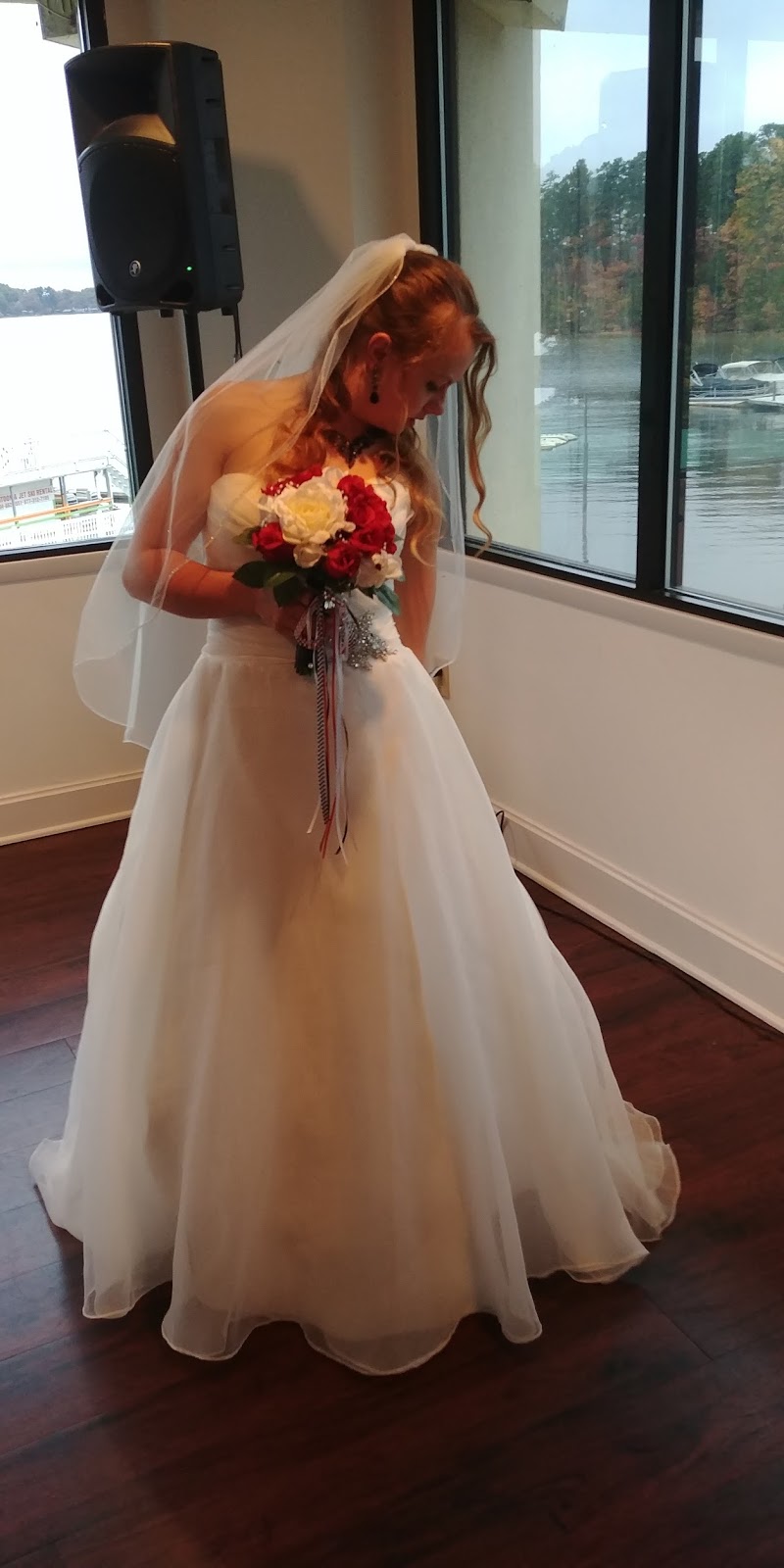
First off, a public congratulations to my sister Roxanne and her new hubby Joe on their wedding! I love you and I’m so proud of you!!!
Secondly, I will be honest, this is a short trip report. But you will soon understand why.
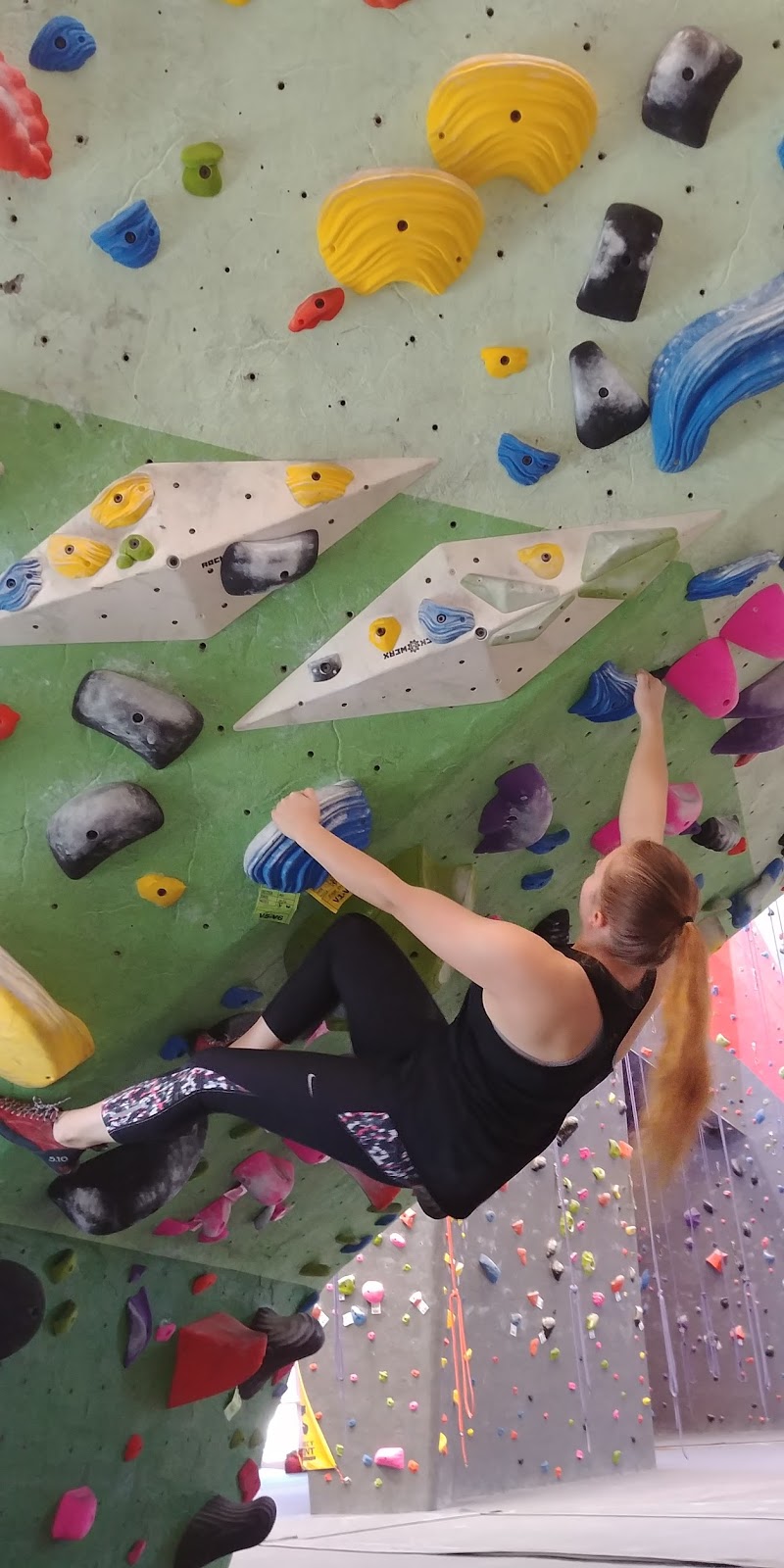
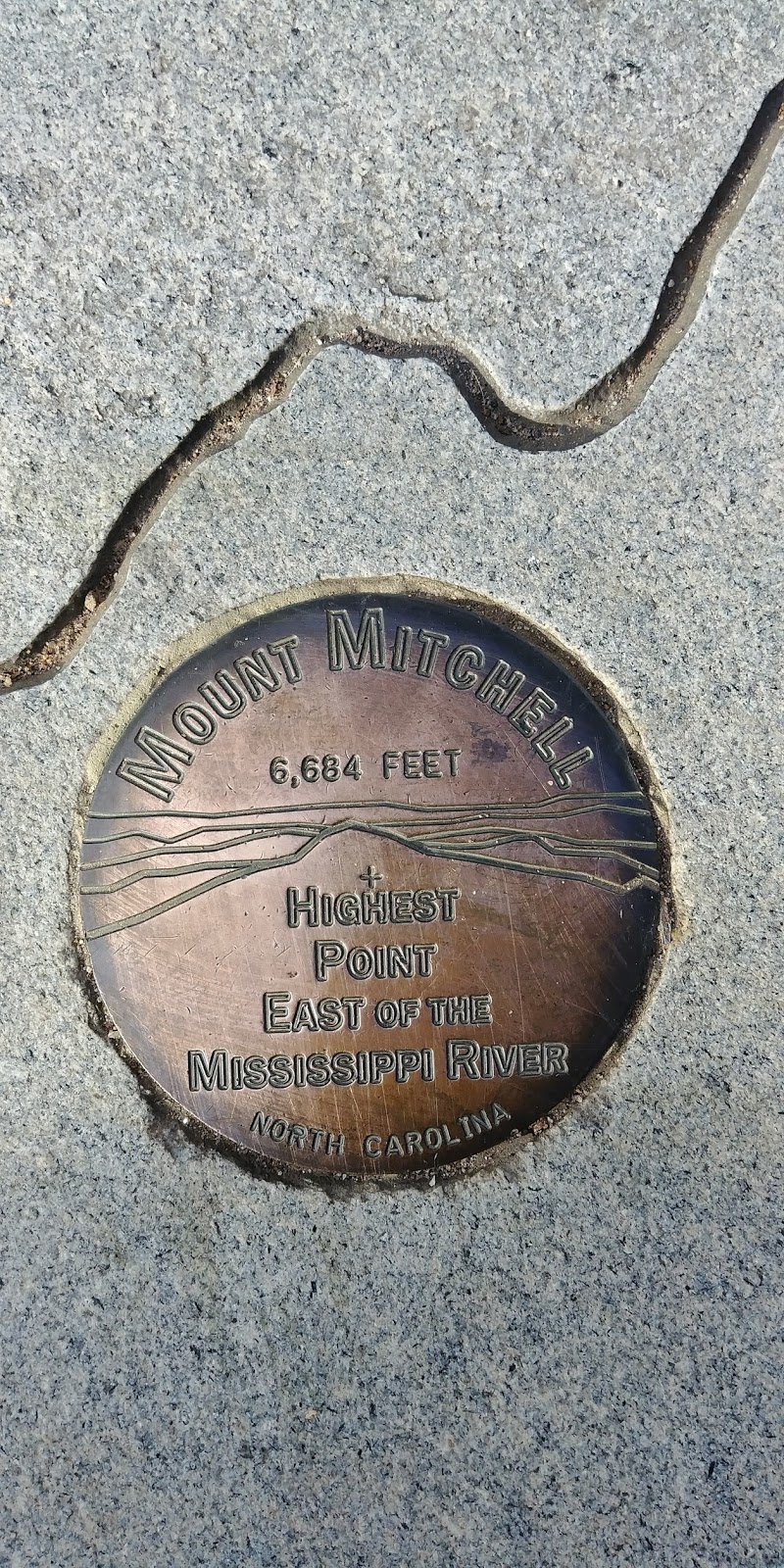
Rewind to about 2 days before I left for North Carolina. I was texting my sister and dad back and forth to figure out what exactly the plan was for the weekend. My sister and I had talked about going climbing together for her bachelorette party, and I was still waiting to get a confirmation from someone. I was due to land in North Carolina late Thursday night and would be in town all day Friday and Saturday for the wedding. Once I found out that we would have time to climb Friday morning and the rest of the day I would be free to do my own thing, I decided to start looking up things to do not having a clue of what was out there besides lakes, trees, trees, and more trees. I knew my sister lived fairly close to the Appalachians, so I decided to look up hikes in the area. I came to find out that North Carolina’s high point, Mount Mitchell, was only about a 2 1/2 drive from my hotel! So that is exactly what I did…
I took my little sister climbing,
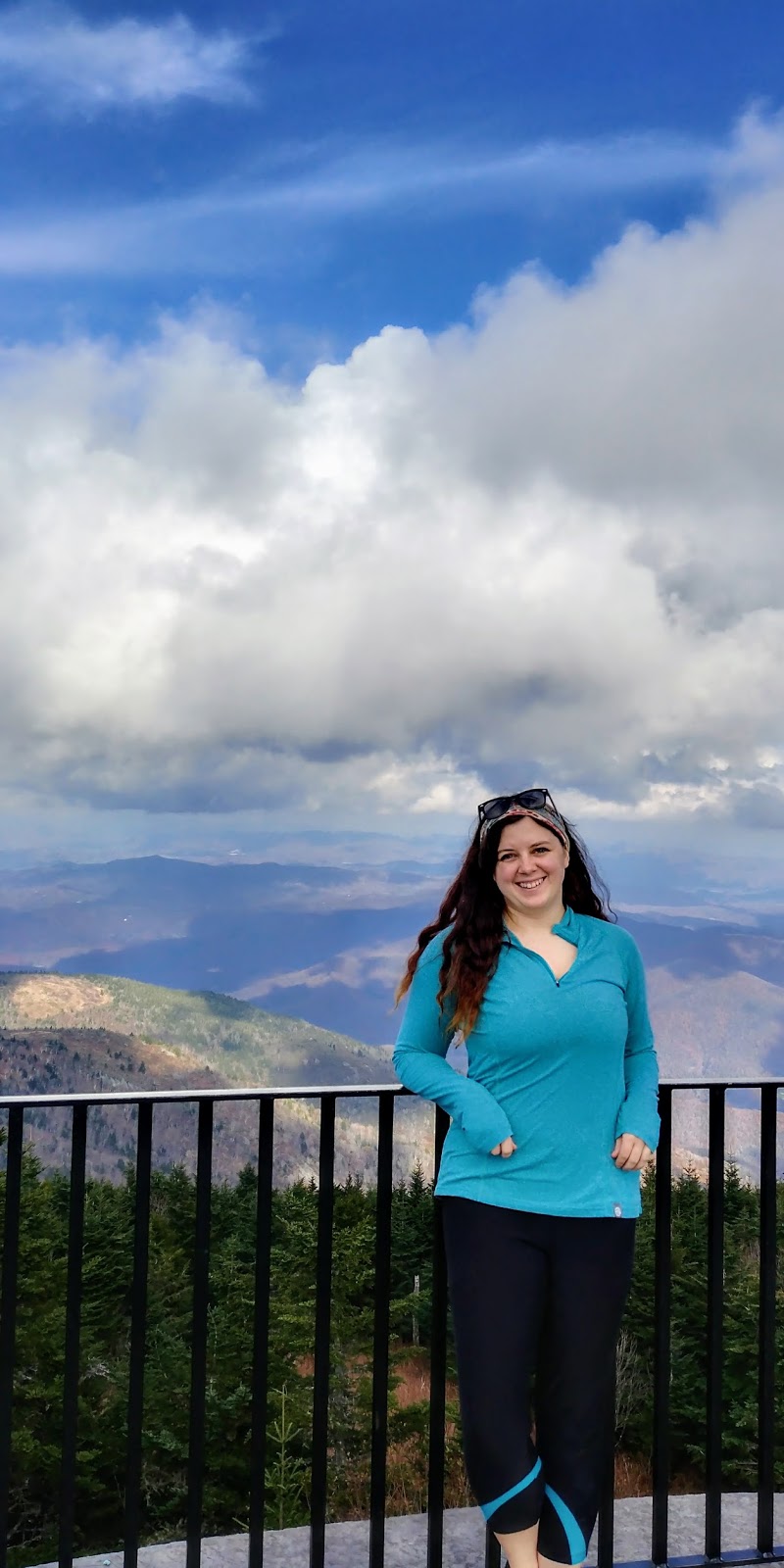
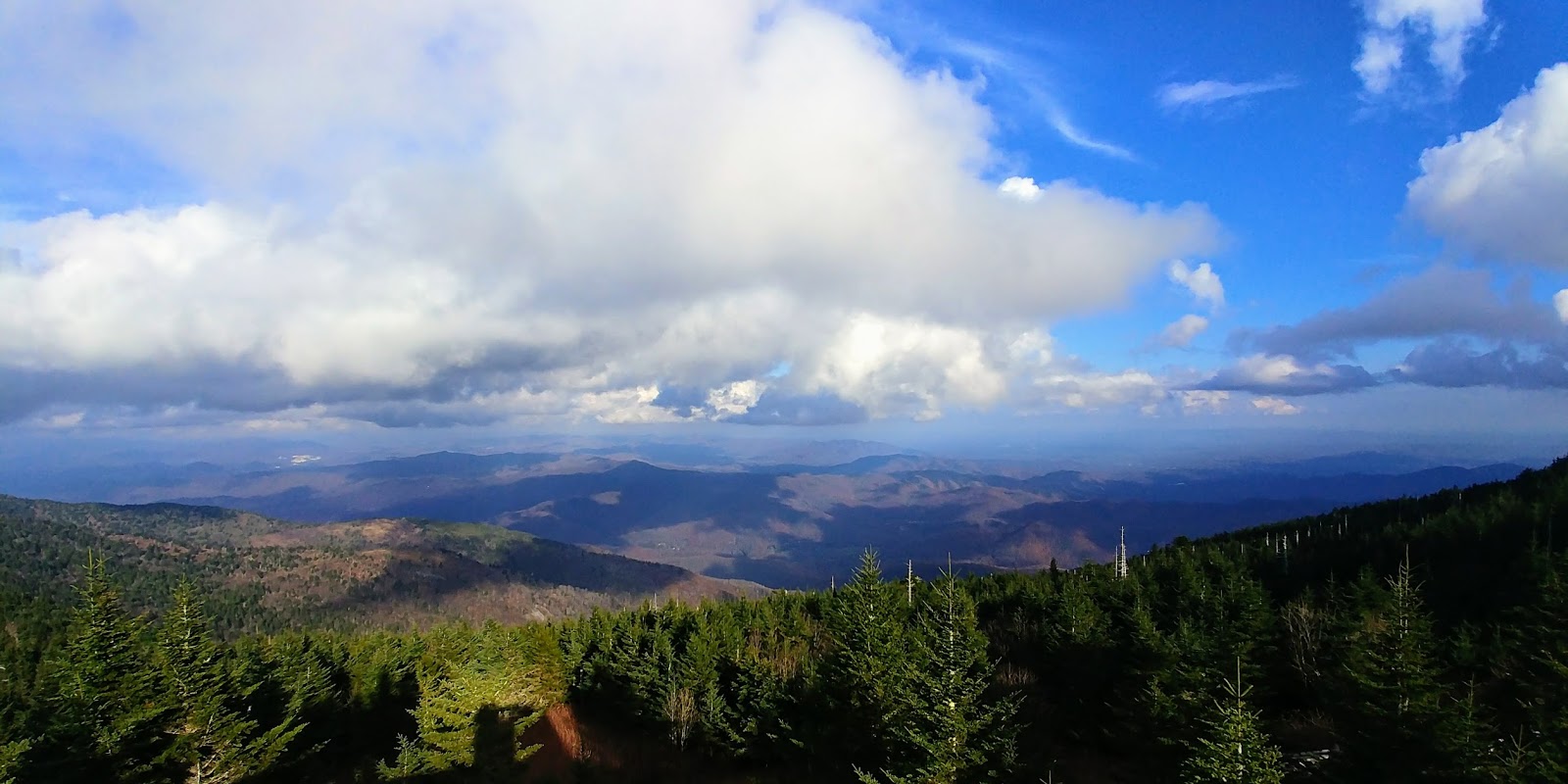
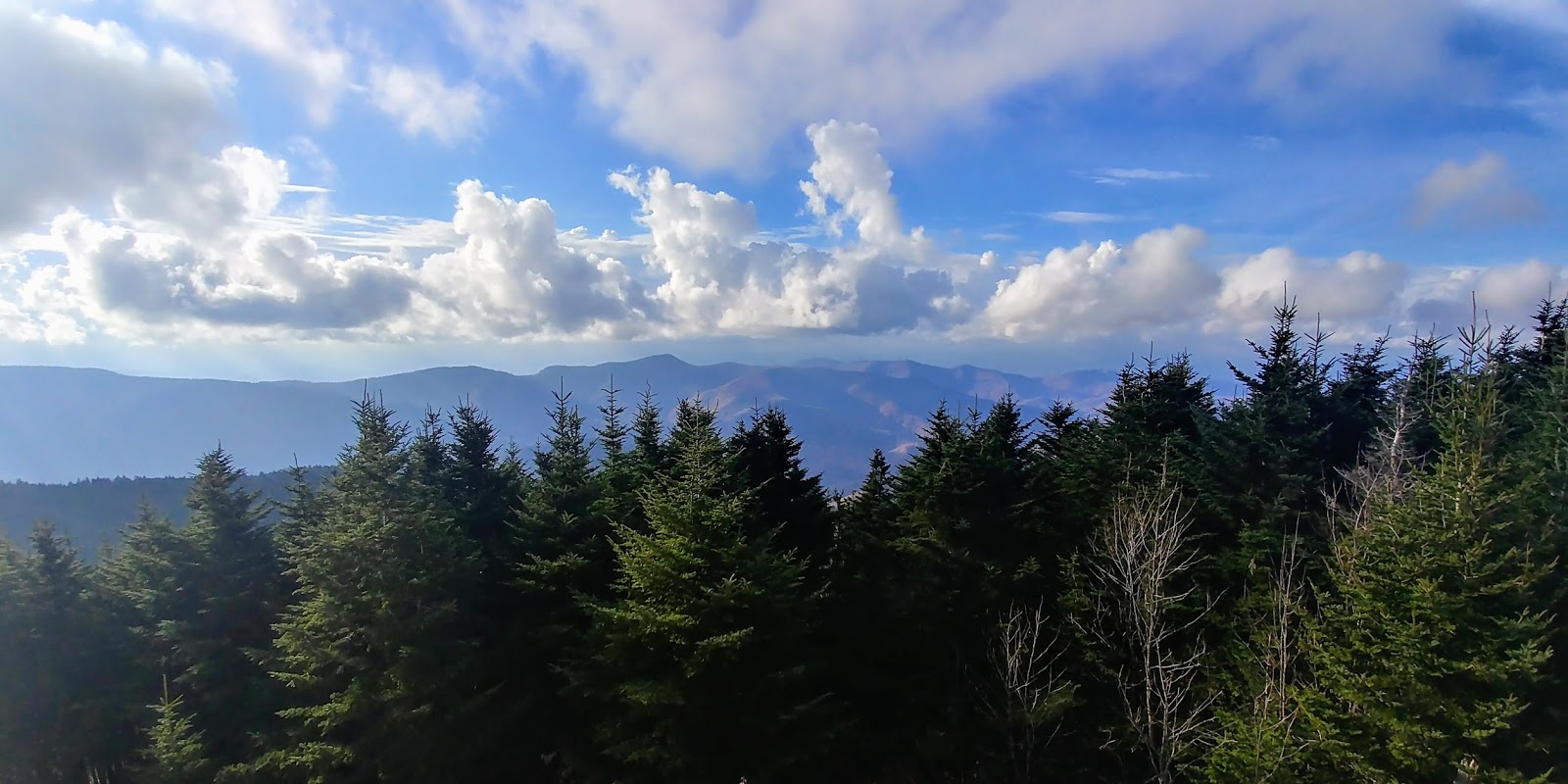
Then, I drove out to Mount Mitchell, where I “hiked” the .25mi paved trail to the top; a mere 6,684’…
Was I dissapointed considering the fact that I live at 5,000′, and I have 11,000’+ peaks at my doorstep? Not Exactly. The views were beautiful, and the Autumn drive was incredibly colorful with the mass amounts of trees. It was a cool peak to check off my list, and the perfect way for someone like me to spend my short weekend in town!
North Carolina View (East)
Tennessee View (West)
As you can imagine, Saturday was wedding day! I wish I could’ve stayed longer to visit my sister, but I am glad that I was at least able to make it for the wedding!
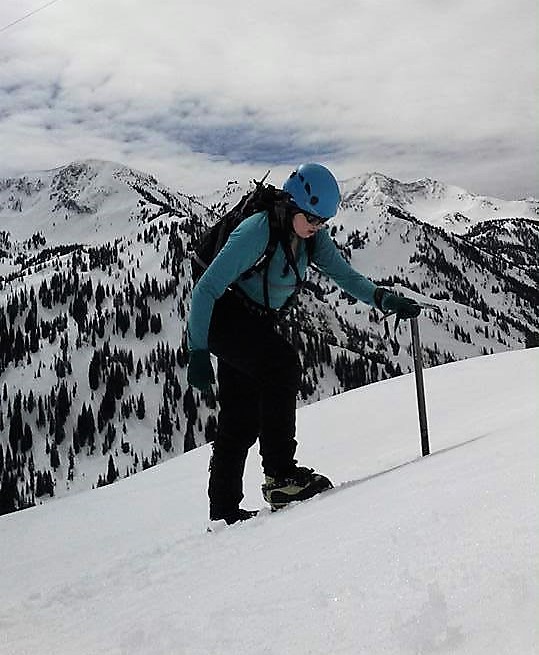
I couldn’t wait to get out and do some climbing. I had been hiking pretty regularly at lower elevations since things had warmed up, but I had been dying to hike and climb in the snow. bad weather nearly every weekend made it difficult with student teaching, so after a nice cold front came through and stiffened up all the snow, I figured I had to get out on the hill while I had the chance!
My first choice for my first big training climb of the season was Mount Superior at 11,132′ but as you will read, that did not go according to plan, which happens. Superior is known in Utah for having the most avalanche activity so winter ascents can only really be attempted in prime conditions.
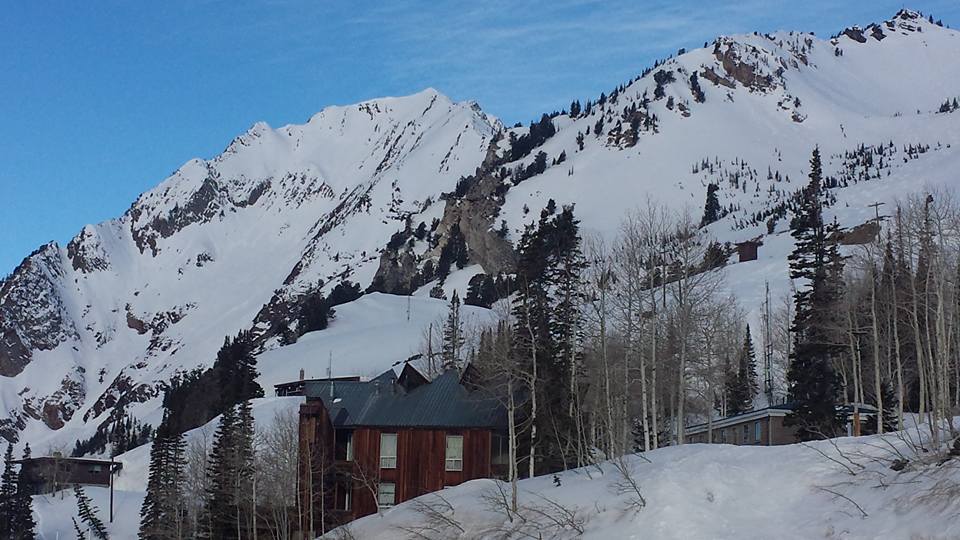
Superior overlooks both Alta and Snowbird Ski Resorts from the other side of Little Cottonwood Canyon. I have climbed it during summer months, the East ridge from Cardiff pass is rated a class 2. Starting from Alta, it is about a 5 1/2 mile hike round trip with an elevation gain of around 2500ft.
My original plan was to get up at 6:30, and start hiking by 7:30 in the morning. …I did not sleep well last night so by the time my alarms went off, I did not want to get up…. I woke up at around 8, checked the temperature up the canyon to find temperatures were still below freezing, so I left and started hiking just before 9am. Right off the bat, the snow was icy and firm. I kept up what I like to call “dry speed” which is the speed in which I can hike on dry dirt trail, so I compare my speed to my past summer climbs.
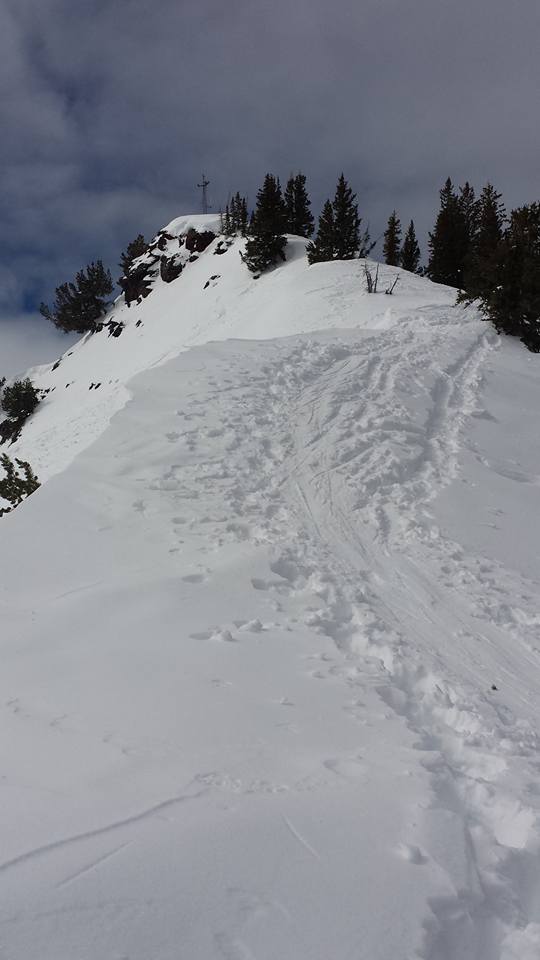
As I got to Cardiff pass and started up the ridge, the snow was INCREDIBLY soft. I would step and sink into thigh deep powder and my climbing speed basically came to a crawl. It took me 45 minutes to climb 250 vertical feet…. it was frustrating. Every step forward was a step backward. As I came up near the summit of Cardiff Peak, I took one look at Superior and sighed. I had a mile left…. a very long mile. Looking along the ridge, it seemed to be the same powdery deep frustrating snow I had just been trudging through and I would take me an eternity. The temperature was rising quickly, I was running out of time as well before I needed to be home, so I turned off the ridge trail to climb the final 20 feet to the summit of Cardiff instead. Superior or bust? Definitely a bust… but not a complete loss.
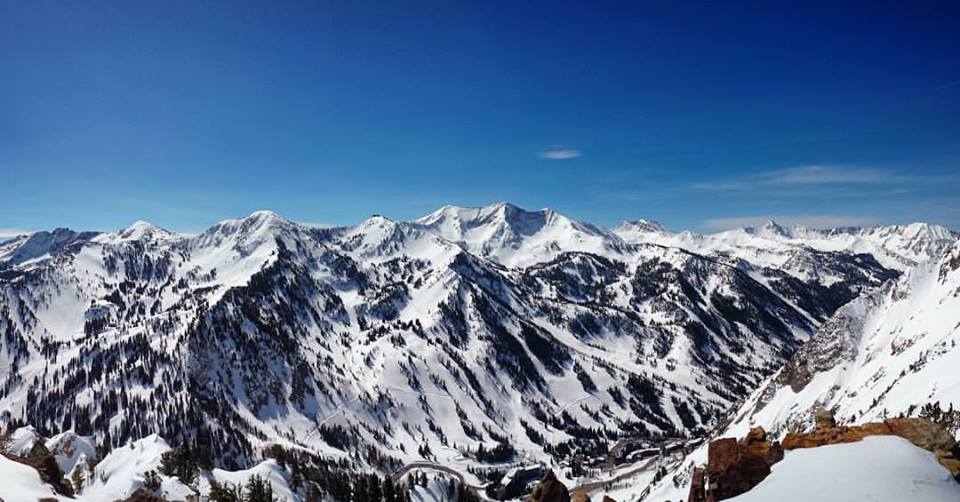
I still got a great “first climb of the season” workout, and great pictures of the amazing views from Cardiff.
Plenty more training climbs to come this Spring. ‘Til next time!
National Eating Disorder Awareness week is always the last week in Febuary and has become an important part of my life each year. Several years ago as part of my recovery, I decided to hold a 5K event to raise money for the National Eating Disorder Association (NEDA) in an attempt to spread awareness of the deadliest mental illness. I nearly lost my life to my eating disorder and truly have the desire to shed a light of hope on mental disorders.
A few months ago I received an email from a representative at Sovereign Health who caught a glimpse of my story and asked if they could interview me for an article. I agreed simply to share my story, not knowing that I would be officially honored during NEDAwareness week this year! I feel so touched and blessed to be able to have my story expand to other reaches of the country (and the world). The article was published and I still feel weird seeing my picture and story published on a nationally recognized site. However the responses so far have been overwhelming. I feel an outpouring of love and support from friends, family, and followers.
So I ask this to you to take a moment for Eating Disroder Awareness:
Second, take a moment to think of someone in your own life who may be struggling. Maybe it’s your sibling, mother, dear friend, or even yourself. Take a second to send them a message, or give them a call, just to say hello. A single gesture to show you care can go a long way to someone who might feel completely alone.
Lastly, participate in NEDAwareness week which is the last week in Febuary each year! Use the hashtag #NEDAwareness and use their shareable graphics and images on social media. You can share the article, you can share this page, you can share information on eating disorders found on the NEDA website. There are also local events in every state all week long. Just search their sites event page.
* * *
My message is HOPE. It has always been hope. Hope for the future, hope for recovery, hope for happiness, hope for triumph. I quote one of my favorite movies, A Knights Tale, when I say: “Hope guides me. It’s what get’s me through the day, and especially the night.” If this rings true for you, I promise you, it always rings true for me. Now that I consider myself recovered, my hope shifts towards my dreams of the Seven Summits. My hope shines on my current day-to-day as I complete my degree, and hope that I can find time and energy to train once this enormous assignment is over. One day at a time, let hope be your guide.
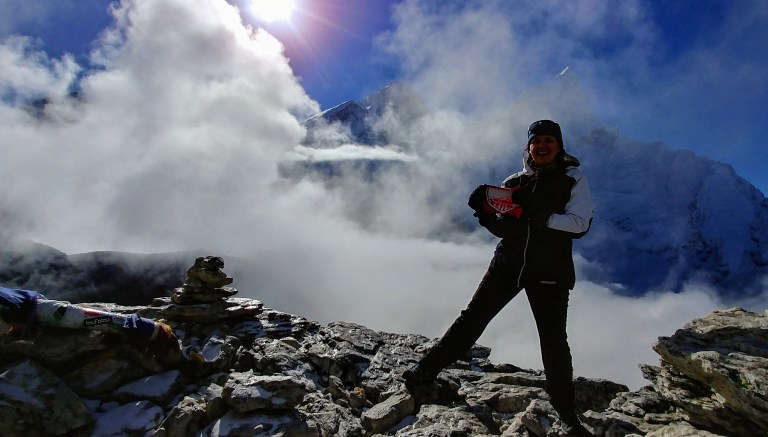
Left: during my ED, Right: on the summit of Kala Patthar, Nepal 18,519′
In the long term, a plan needed to be formulated for my biggest and most ambitious of goals: The Seven Summits.
When I decided I wanted to be teach high school, I knew the pay wouldn’t be great, but I would have summers off to go play. However, climbing season in Nepal is not June to August… it is right in the middle of school testing season. Whether or not I take a year off or find a long term sub when the time comes, who knows… I’ll cross that bridge when I get to it. However, the rest of the list I can knock out during summers or Christmas break which works well in my favor! When I start hitting the big boys, I’m going to NEED to figure out some logistics; yet another bridge to cross in due time.
SO, without further ado, I give you my climbing timeline for completing The Seven Summits in the next Seven years!
Year 0-COMPLETE! 2017: I am calling this year 0 because my summer consisted of job searching for teaching positions and I spent a majority of the year being beyond broke. Realistic planning for adventures could not be finalized until I found a job. Since I now have a teaching position: this year’s goal is complete!
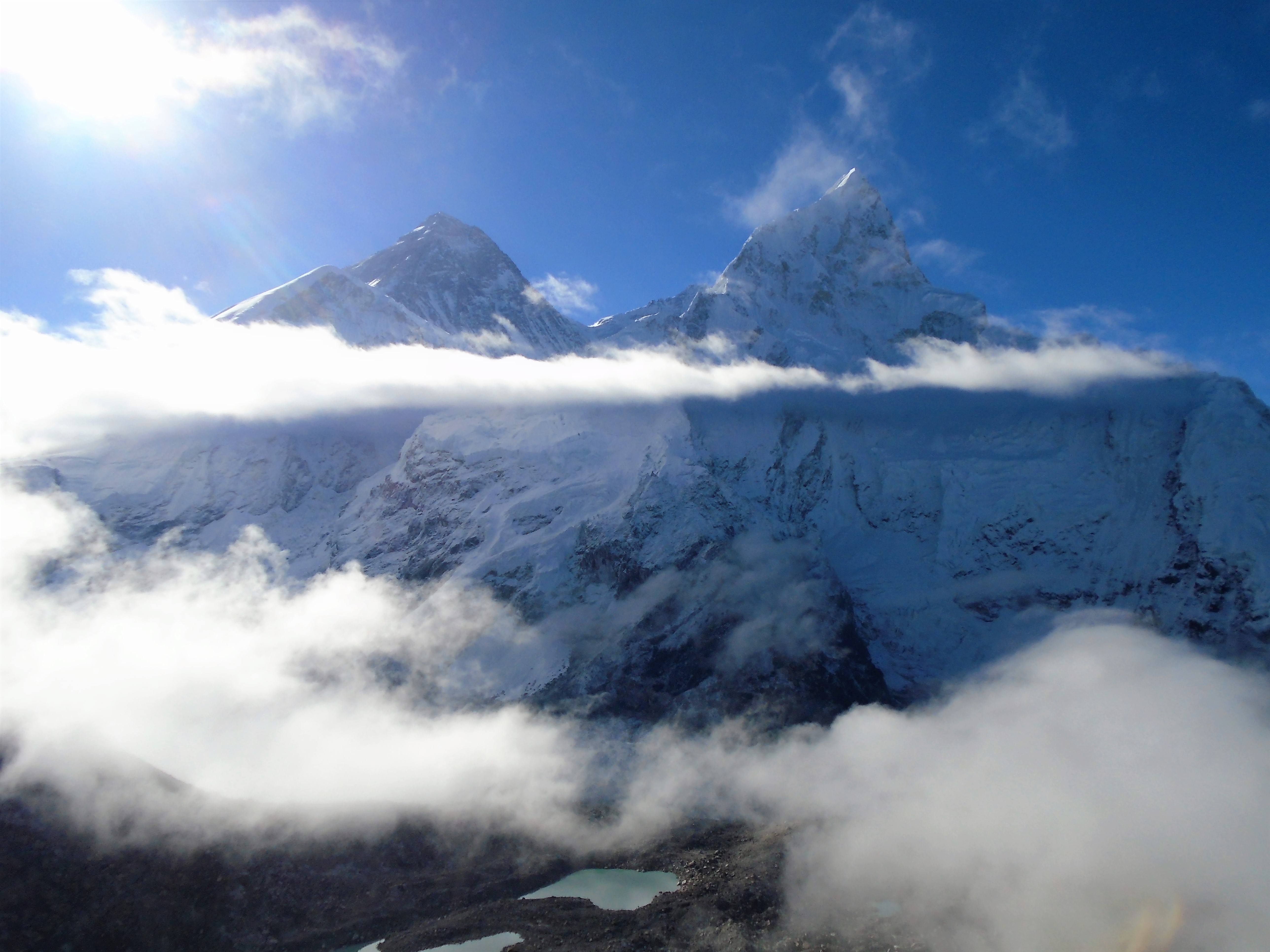
Year 1-COMPLETE! June 2018: Everest Base Camp and Kala Patthar (18,519 ft/ 5,644.5 m) Because I was itching so badly to Everest up close and in person, and while I’m there!
Year 2- July 2019: FIRST SEVEN SUMMIT! Kilimanjaro, Africa (19,341’/5,895 m) I am booked with Eco-Africa Climbing on a Women Only Climb! #womenclimbkili!
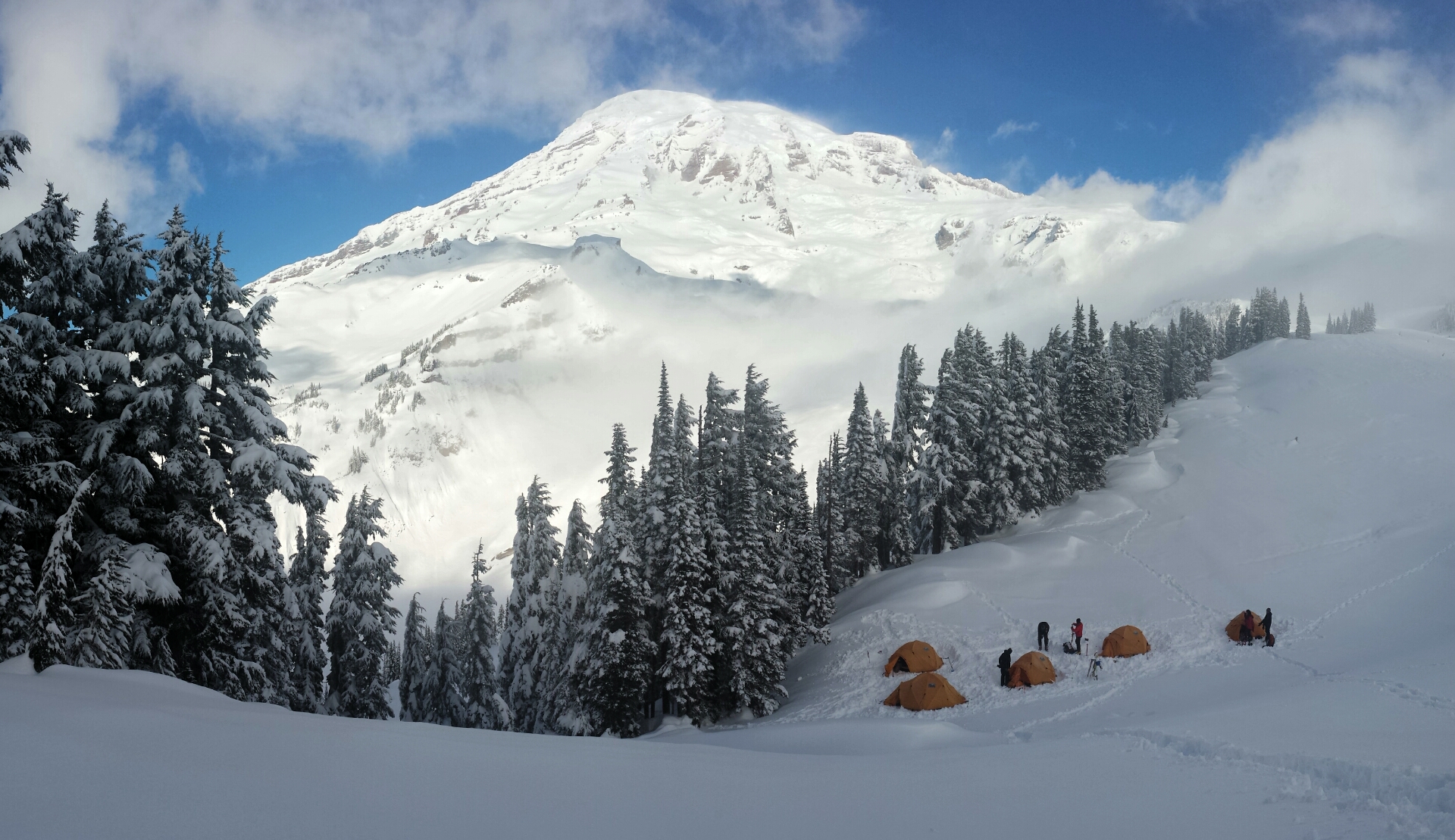
Year 3- July 2020: Plans to move during summer break 2020 are in the works. That being said, there is no money for international climbing this year, but there is wiggle room for a trip to Washington to once again attempt Mount Rainier! (14,411’/4,392m)
Year 4- July 2021: Mount Elbrus, Europe (18,510’/5,642 m) I plan to go to this beautiful Russian volcano.
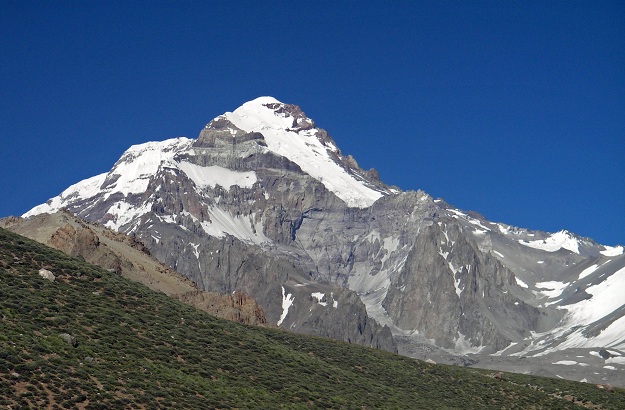
December 2021: Aconcagua, South America (22,841’/6,961 m) I actually thought about climbing this one first because I am so anxious and impatient to get climbing. But after looking at it from a realistic perspective, we are going to try to buy our first house in the first year or two of me teaching. My husband should graduate from college by 2020 and make the financial load significantly easier, so putting it off until later was the smarter thing to do.
Year 5– December 2022: Mount Kosciuszko, Australia (7,310’/2,228 m) For those who don’t know, there are two main lists for the Seven Summits, the Bass List and the Messner List which each have a different summit for the Australian Continent. I decided on doing both peak but am starting with the Bass List for a few reasons… One, being from Utah, and growing up skiing Snowbird, then working at Snowbird, and meeting Dick Bass personally, I feel a special connection to the Bass list. Two, Puncak Jaya, also known as Carstensz Pyramid, is extremely expensive and difficult to get to as it’s deep in the Filipino jungle and in a war zone. And three, my husband and I have always wanted to go to New Zealand, so we are planning a vacation for our 10 year anniversary down south with a quick pit stop to Australia to take a stroll up the easiest of the Seven Summits and visit a koala sanctuary!
Year 6- June/July 2023: Denali, North America (20,322’/6,194 m) I am very excited for this one. Alaska is beautiful and if it wasn’t so freaking expensive, I would probably climb this one earlier too.
Year 7- April-June 2024: Mount Everest, Asia (29,029’/8,848 m) 7 years of prep for the tallest mountain on earth. I plan to ascend the North Col route from Tibet. There are pros and cons to each side but the crowds are smaller on the Tibet side as permits are limited, which also makes them more expensive… The ONLY thing harder than climbing Everest, is funding Everest.
December 2024: Vinson Massif , Antarctica (16,077’/4,900 m) I saved what I deem to be the most epic for last. (as well as the most expensive… yes more expensive than Everest) It may not be nearly as high as some of the others, but it has an incredible amount of character. Deep in the frozen wasteland of Antarctica, this summit has the lowest amount of resources available to it. There are no cities in Antarctica. There is a camp, only accessible by a 4 hour plane ride from Chile. You have to drag all your gear around by sled, and it is a very cold and lonely place. I am just glad the sun is up for 24 hours down there during that time of year. I can’t imagine how dark and desolate it would be. (those poor penguins). A successful summit bid by this timeline would mean I complete the Bass Seven Summits just before my 35th birthday!
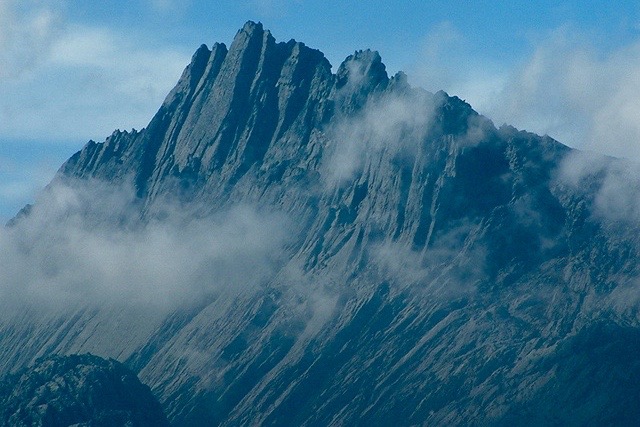
BONUS: The 8th Seven Summit for Year 8– June 2025: Puncak Jaya, also known as Carstensz Pyramid (16,024 ft/4,884m) This will complete Messner List and I will be part of an Elite crowd that has done both lists. This is the most technical of all the Seven Summits, therefore completion of the Messner list is more rare.
BONUS: Explorer’s Grand Slam: The Geographic North and South Poles! The more I work towards my goals, the more I wonder how far I can actually go! After following Colin O’Brady as he recently crossed Antartica solo and unaided, I have been seriously interested in exploring the poles; and I don’t just plan to fly to the pole, I want to complete what is known as “The Last Degree”: A 60 naudical mile ski trek from the 89th degree to the pole hauling a sled full of gear behind me!
As much as I would like to, I can’t guarantee this list’s completion in 7 years, and it will probably be adjusted as time goes on. There are simply too many factors out of my control; politics in foreign countries, unforeseen budget factors, weather, etc. But what I can guarantee is that I will personally strive for each one to the best of my ability until they are complete no matter what it takes.
People ask me all the time, “Why do you want to climb Everest?” “What is the point in putting yourself through physical anguish to reach the top?” In short reply it’s easier to just say “I don’t know” or “it’s hard to explain”. But the reality is I don’t simply have one reason for why I climb, I have several. I climb because I feel a very real, very spiritual connection in the mountains. My sister passed away when I was a kid, and when I summited my first 14er at the age of 13, I dedicated the climb to my baby sister, and ever since then those high peaks make me feel closer to her. After years of suffering through crippling depression and a dangerous eating disorder, completing something this huge is monumental to me. It’s simply proving to myself that I can do anything I set my mind to. I do it for me, and I hope to set an example for others like me. That’s why I write this silly blog. My biggest goal of all, is to simply share my story in hopes that maybe someone else who is suffering, can look inside of themselves and realize that they don’t have to live in despair; they can do anything they set their mind to. It doesn’t have to be climbing, it could be something as simple as learning an instrument they have always wanted to learn, travel to a corner of the world they have always longed to see, or following a career passion they never dreamed was possible. As soon as you are okay with yourself and who you are, and you no longer care what society tells you what you should be or what your parents think you should be, and you start living your life for yourself, then you will be truly happy. You will be able to Conquer Yourself.
Keep up on my climbs! Click here to check out my current successful summit list!
Are you fortunate enough to live near the mountains?
GOOD. You are going to need the altitude.
I’ll get right to the point. The BEST way to combat altitude sickness is acclimatization. No matter what the elevation of your nearest peaks are, taking advantage of high elevation before embarking on an expedition can be crucial to avoiding Acute Mountain Sickness during your trip. If you are within a short drive distance from anything at least 2-3,000 vertical feet from where you live, pay attention, this is for you! The goal in training is to get as high as you can for as long as you can to get a head start on acclimatizing for your climb.
STEP 1: Hang Out.
I would like to hope and think that if you are planning an expedition, or even a simple trek to Everest Base Camp, that you have SOME experience hiking at elevation. This step may be obsolete. But if it’s been a while, or you have been living at sea level, simply drive up the canyon and get higher. DO NOT go higher than 8,000 feet above where you live when you first start. (this means if your town is at 2,000 feet above sea level, don’t go above 10,000 feet). Ascending too fast can be dangerous if your body is not used to the altitude. Take your time. slowly increase the altitude, drink LOTS of water, and enjoy the view.
STEP 2: Work Out.
After taking a few trips up into the mountains, it is time to start working out at higher elevations. Altitude Sickness can start as low as 8,000 feet above sea level. If you live in a low sea level state like California, I do not recommend a trip to the High Sierras as your first hike. Start lower. you want to start working out no more than 3,000 feet above where you live. You can gradually increase the elevation as your body becomes more adapt to the altitude. Take gradually longer hikes and with gradually heavier packs. Again, Water is key. You dehydrate faster at high altitude as your body needs it more. Most cases of Acute Mountain Sickness actually start from dehydration.
STEP 3: Camp Out.
When you are feeling confident in your ability to hike high and feel good, it is time for a camp out! Sleep anywhere from 3-5,000 feet from where you live, but no more than 6,000 for the first night. Your body may feel adapted, but wait until it has to try to rest and sleep at that altitude. Your body uses sleep-time to heal itself. If it can’t feel like it’s getting properly rested, you won’t wake up feeling so good the next morning. If you are doing a multi-day trip, or decide to come back another weekend, you can slowly increase the sleeping altitude. try not to increase it by more than 1,000 feet per day. If you start feeling like you have a headache, light headed, nauseous, or dizzy, descend immediately.
Vertically Challenged?
Many major cities have Hyperbaric Therapy Clinics that can be beneficial to your training. Some are as cheap as $35/session. If this is simply not an option, a road trip to the nearest mountain range will do you some good, even if you can only find time for one weekend camping trip. Any elevation is better than no elevation. Regardless, the #1 key for those at at low elevations, is to maximize cardio fitness.
Once you feel like your body is getting into the groove of things as you train, you will want to start implementing targeted exercises. This means that you are doing things that specifically target muscle groupings or body functions needed while mountain climbing. Ideally, you would want to take a day hike with a certain amount of weight and hike trails with increasing elevation gain. However, not everyone has immediate access to nice high peaks to train on so I have come up with a few ideas you can do at home or in a gym. So here are 5 mountain training exercises you can do without a mountain!
#5: Hill Sprints
You may not have mountains, but most places have a nearby hill. Whether its an entire neighborhood in length, or just a little one at a park, you can strap on a pack, and time yourself. The first goal is to get faster. You want to be climbing at a rate of 1000 vertical feet per hour minimum before adding weight.
#4: Weighted Hill Climb
This is how you can add onto the sprints. you try it, add 10% of your body weight added to a pack. Each week, try to get a little bit faster and/or add 5% more weight. Your goal should be that able to carry a 20-25% of your body weight in a pack up 1000 vertical feet per hour nearing the date of your trip. If hills are simply non existent where you live, stair masters, or treadmills with high incline will work just fine as long as you don’t mind people in the gym giving you a look for wearing a rucksack.
#3: Stadium Stairs
High school and college stadium seats are full of stairs! Did you know that they are a great way to build endurance? You can create your own interval workout on any stadium seating! The bleachers are great for long strides. a great deep thigh burn in your quads, and high intensity cardio on your heart and lungs. The smaller little stairs can be used for rapid sprint bursts, or a rest walk on the way back down. On a target training day, hauling a heavy rucksack up and down those stairs will REALLY work those leg muscles. You can use the same method as the hill sprints and climbs by adding more weight and trying to increase speed over time.
#2: City Hike or Ride
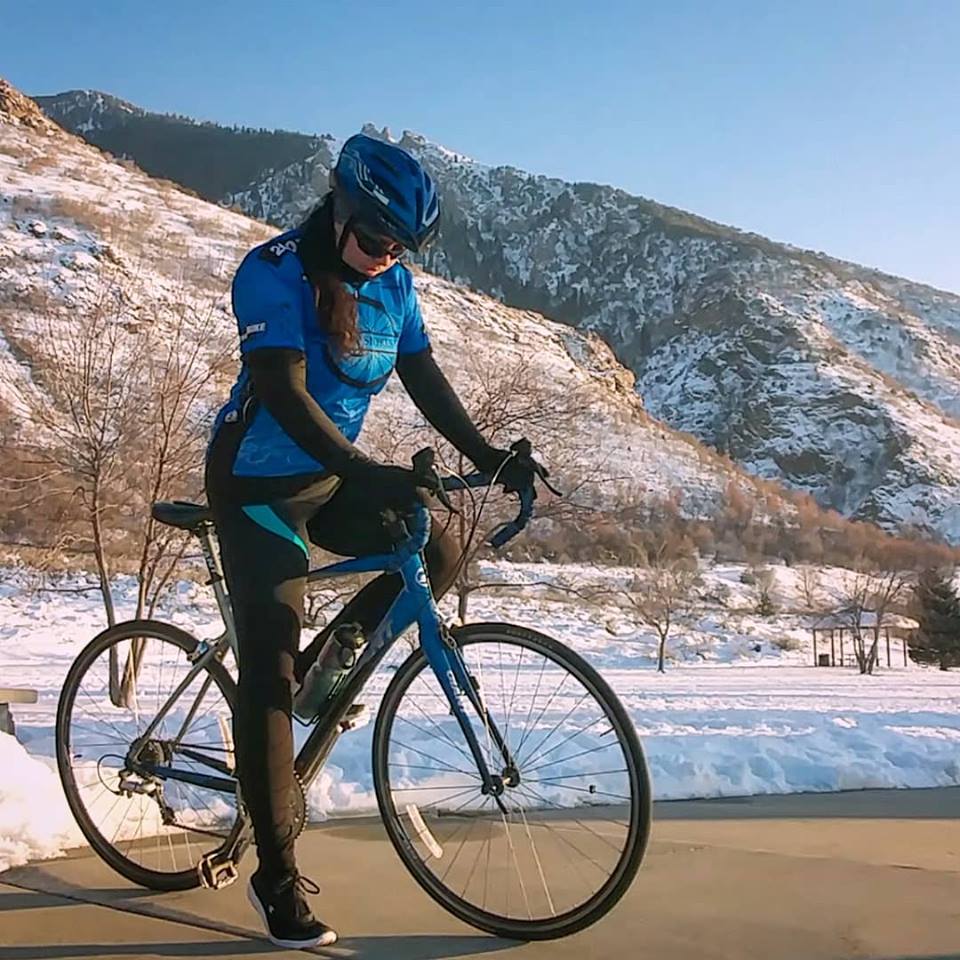
NOTE: If you live in a crowded city, notorious for bad air quality, this one is NOT recommended. Keep your lungs healthy! Time to start putting miles on your boots. However, you may not have a mountain to climb on. If that is the case, pick 2 points in the city you live. they can be anywhere, or you can make it fun and visit some landmarks. You will be carrying 30-40lbs in your pack, and taking a stroll through the town. If your town is pretty flat, start with a goal of 5-6 miles (should take about 2-3 hours). Increase it by a mile or two each week. you can map out a loop, or have someone drop you off and pick you up and two different points, or utilize public transit. Just remember that once you start walking, don’t stop until you reach your endpoint. Another option would be to take a bike ride! Aim for at least an hour total ride time to start (12-15miles), and with the same idea, pick a landmark, and don’t stop until you reach your destination and return. Just be sure to obey rules of the road!
#1: Beach Run
Okay, okay so just because you don’t have mountains, doesn’t mean you have a beach either… but do you know where you can find sand dunes nearby? Or maybe sand trails or dirt hills? Running in the sand has always had a notorious reputation for being challenging and exhausting. The loose grains beneath your feet don’t give you traction and can slow you way down. This is a good way to build endurance not only in your heart and lungs, but in your legs. Equestrian parks are a GREAT place to run around for this. those annoying little wood chips are almost as bad as sand. If you are not a ran of running, simply strap on your pack, and try taking a stroll. Shoot for a 20-minute mile with 30-40lbs in your pack. That will get your heart pumpin’!
There you have it! Hopefully you can use these 5 mountain training exercises you can do without a mountain in your training routine!
Once you feel like your body is getting into the groove of things as you train, you will want to start implementing targeted exercises. This means that you are doing things that specifically target muscle groupings or body functions needed while mountain climbing. Ideally, you would want to take a day hike with a certain amount of weight and hike trails with increasing elevation gain. However, not everyone has immediate access to nice high peaks to train on so I have come up with a few ideas you can do at home or in a gym.
#5: Hill Sprints
You may not have mountains, but most places have a nearby hill. Whether its an entire neighborhood in length, or just a little one at a park, you can strap on a pack, and time yourself. The first goal is to get faster. You want to be climbing at a rate of 1000 vertical feet per hour minimum before adding weight.
#4: Weighted Hill Climb
This is how you can add onto the sprints. you try it, add 10% of your body weight added to a pack. Each week, try to get a little bit faster and/or add 5% more weight. Your goal should be that able to carry a 20-25% of your body weight in a pack up 1000 vertical feet per hour nearing the date of your trip. If hills are simply non existent where you live, stair masters, or treadmills with high incline will work just fine as long as you don’t mind people in the gym giving you a look for wearing a rucksack.
#3: Stadium Stairs
High school and college stadium seats are full of stairs! Did you know that they are a great way to build endurance? You can create your own interval workout on any stadium seating! The bleachers are great for long strides. a great deep thigh burn in your quads, and high intensity cardio on your heart and lungs. The smaller little stairs can be used for rapid sprint bursts, or a rest walk on the way back down. On a target training day, hauling a heavy rucksack up and down those stairs will REALLY work those leg muscles. You can use the same method as the hill sprints and climbs by adding more weight and trying to increase speed over time.
#2: City Hike or Ride
NOTE: If you live in a crowded city, notorious for bad air quality, this one is NOT recommended. Keep your lungs healthy! Time to start putting miles on your boots. However, you may not have a mountain to climb on. If that is the case, pick 2 points in the city you live. they can be anywhere, or you can make it fun and visit some landmarks. You will be carrying 30-40lbs in your pack, and taking a stroll through the town. If your town is pretty flat, start with a goal of 5-6 miles (should take about 2-3 hours). Increase it by a mile or two each week. you can map out a loop, or have someone drop you off and pick you up and two different points, or utilize public transit. Just remember that once you start walking, don’t stop until you reach your endpoint. Another option would be to take a bike ride! Aim for at least an hour total ride time to start (12-15miles), and with the same idea, pick a landmark, and don’t stop until you reach your destination and return. Just be sure to obey rules of the road!
#1: Beach Run
Okay, okay so just because you don’t have mountains, doesn’t mean you have a beach either… but do you know where you can find sand dunes nearby? Or maybe sand trails or dirt hills? Running in the sand has always had a notorious reputation for being challenging and exhausting. The loose grains beneath your feet don’t give you traction and can slow you way down. This is a good way to build endurance not only in your heart and lungs, but in your legs. Equestrian parks are a GREAT place to run around for this. those annoying little wood chips are almost as bad as sand. If you are not a ran of running, simply strap on your pack, and try taking a stroll. Shoot for a 20-minute mile with 30-40lbs in your pack. That will get your heart pumpin’!
So you have signed up for an expedition and are planning a big climb. Now what?! Usually the first, as well as one of the most important questions one tends to ask themselves is “how do I train?”. Mountaineering requires a well rounded level of fitness. I have studied, trained, and practiced for a number of years now and I have found the “easiest” way to get you started! So, Let’s create a mountain training plan:
Here’s what you will need in your mountain training plan:
A Timeline: A minimum of 12 weeks is recommended for any major climb, but for large expeditions like Everest or Cho Oyu, one should plan for anywhere between 6 months to a year of targeted training depending on current athletic state. If you are out of shape, start smaller, and plan out extra weeks to get into the groove of things.
Cardiovascular Fitness: Cardio fitness includes your heart and lung’s ability to use the oxygen in the air and is measured through aerobic exercises like running, swimming, and cycling. you will want to keep track of your heart rate and you will want to push it to a variety of levels. On days that focus only on cardio. focus on getting to 85% your maximum heart rate. On target days, where you might be hiking or carrying a backpack full of weight, shoot for 65-75%.
Intervals: Mixed into your cardio days, you will want to work intervals where you rotate from about 70% MHR to 85% MHR. This will help your cardio endurance by changing the various intensity levels.
Targeted Exercises: This means hiking with weight, gaining elevation, working out AT elevation (if you can), doing hill sprints, rock climbing, stair climbers, whatever you have access to. This focuses both strength and cardio endurance. We will go in more detail later.
Strength Training: Strength training focuses on muscle groups you will be using on the mountain. You can start with a well rounded strength day until you feel able enough to focus on muscle groups. regardless of what you work on, always shoot for 60% MHR during strength training to increase cardio endurance as well.
Flexibility: Safety and preventing injury are #1. You MUST stretch EVERY DAY (including rest day). This will keep you limber, as well as help with muscle fatigue. If you feel you are painfully sore constantly, you are not stretching enough. Having a full range of motion while you climb is extremely important. There are two different types of stretches, kinesthetic and static. Kinesthetic means “stretching in motion”, while static stretches are when you hold a stretch pose for 15 to 20 seconds. Be sure to do kinesthetic stretches before exercise to warm u your muscles. Examples include body twists, jumping jacks, high knees, squats and much more. After excising when your muscles are warm, you can do static stretches to prevent lactic acid build up. NEVER do static stretches on cold muscles as you could severely tear something. (take it from someone who learned this lesson the hard way.)
What is the end goal?
Mountaineering is an endurance sport. Many sports involve either long, slow and steady progress, or short fast bursts like sprints. Mountaineering requires a wide range of different intensity levels all day long. This means we have to train our bodies to do it all.
SO… How should we map it out?
Well, If you feel you are out of shape, that is your first goal! You want a minimum of 180 minutes of cardio each week when you start (NOT including your target exercises). As you get closer to your climb you should be increasing the amount. By the time you reach your final training weeks, you should have nearly doubled that time and your target exercises should be full day hikes, or exercise days. (I suggest planning these on the weekend).
Your strength training should be at least twice a week (not including your target exercise). Intervals at least twice a week, and again, stretch every day.
Here is an example of what a week might generally look like:
Begin mapping out your first 4-6 weeks and see how your body does. You can adjust it accordingly as you go along. By then end of your 12 week plan, you should be focused on walking or hiking 5+ miles a day, 5-6 days a week with added weight, strength training, and intervals mixed in.






















 Jacque Tietjen