5 Mountain Training Exercises You Can Do Without a Mountain

Once you feel like your body is getting into the groove of things as you train, you will want to start implementing targeted exercises. This means that you are doing things that specifically target muscle groupings or body functions needed while mountain climbing. Ideally, you would want to take a day hike with a certain amount of weight and hike trails with increasing elevation gain. However, not everyone has immediate access to nice high peaks to train on so I have come up with a few ideas you can do at home or in a gym.

#5: Hill Sprints
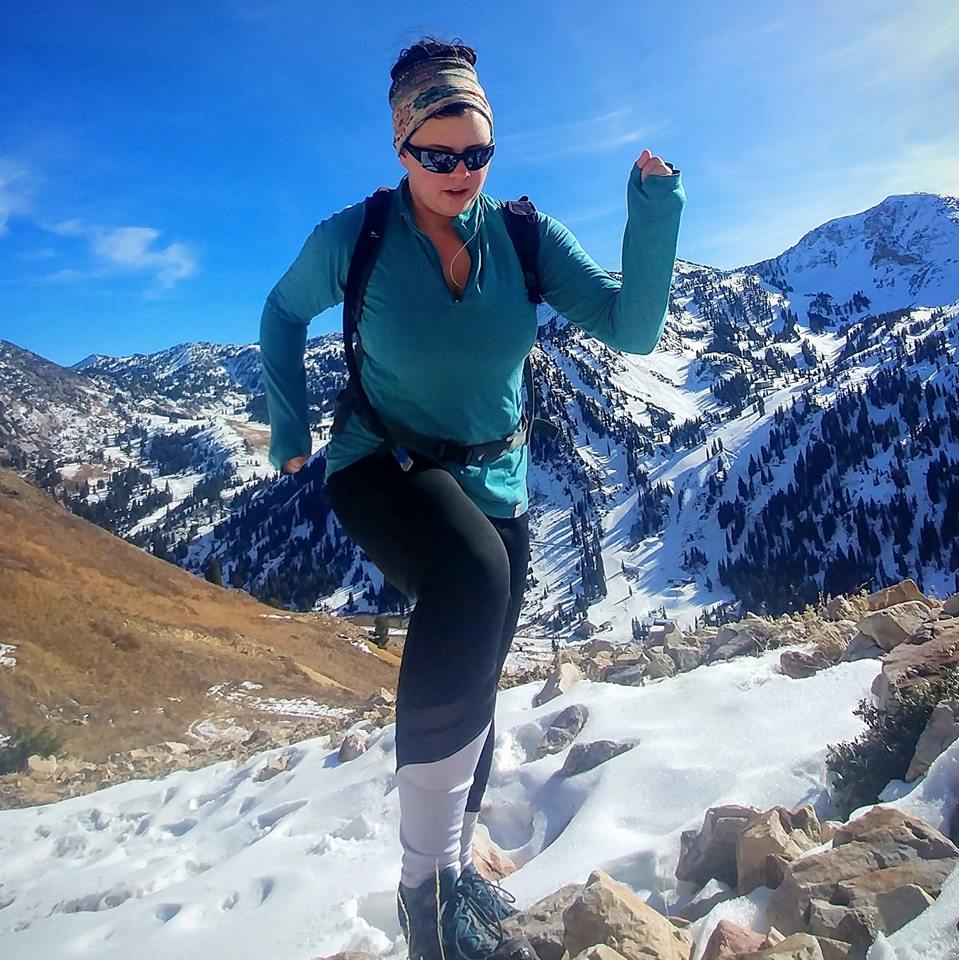
You may not have mountains, but most places have a nearby hill. Whether its an entire neighborhood in length, or just a little one at a park, you can strap on a pack, and time yourself. The first goal is to get faster. You want to be climbing at a rate of 1000 vertical feet per hour minimum before adding weight.

#4: Weighted Hill Climb

This is how you can add onto the sprints. you try it, add 10% of your body weight added to a pack. Each week, try to get a little bit faster and/or add 5% more weight. Your goal should be that able to carry a 20-25% of your body weight in a pack up 1000 vertical feet per hour nearing the date of your trip. If hills are simply non existent where you live, stair masters, or treadmills with high incline will work just fine as long as you don’t mind people in the gym giving you a look for wearing a rucksack.

#3: Stadium Stairs

High school and college stadium seats are full of stairs! Did you know that they are a great way to build endurance? You can create your own interval workout on any stadium seating! The bleachers are great for long strides. a great deep thigh burn in your quads, and high intensity cardio on your heart and lungs. The smaller little stairs can be used for rapid sprint bursts, or a rest walk on the way back down. On a target training day, hauling a heavy rucksack up and down those stairs will REALLY work those leg muscles. You can use the same method as the hill sprints and climbs by adding more weight and trying to increase speed over time.

#2: City Hike or Ride
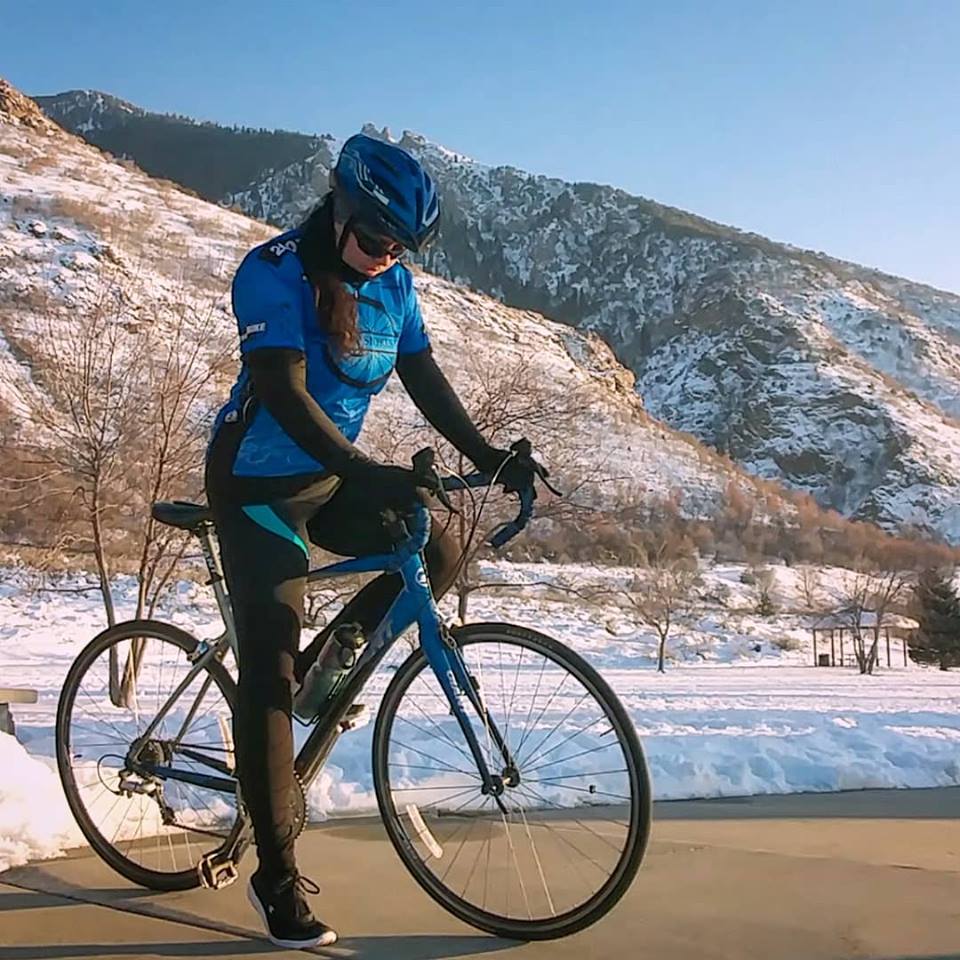
NOTE: If you live in a crowded city, notorious for bad air quality, this one is NOT recommended. Keep your lungs healthy! Time to start putting miles on your boots. However, you may not have a mountain to climb on. If that is the case, pick 2 points in the city you live. they can be anywhere, or you can make it fun and visit some landmarks. You will be carrying 30-40lbs in your pack, and taking a stroll through the town. If your town is pretty flat, start with a goal of 5-6 miles (should take about 2-3 hours). Increase it by a mile or two each week. you can map out a loop, or have someone drop you off and pick you up and two different points, or utilize public transit. Just remember that once you start walking, don’t stop until you reach your endpoint. Another option would be to take a bike ride! Aim for at least an hour total ride time to start (12-15miles), and with the same idea, pick a landmark, and don’t stop until you reach your destination and return. Just be sure to obey rules of the road!

#1: Beach Run

Okay, okay so just because you don’t have mountains, doesn’t mean you have a beach either… but do you know where you can find sand dunes nearby? Or maybe sand trails or dirt hills? Running in the sand has always had a notorious reputation for being challenging and exhausting. The loose grains beneath your feet don’t give you traction and can slow you way down. This is a good way to build endurance not only in your heart and lungs, but in your legs. Equestrian parks are a GREAT place to run around for this. those annoying little wood chips are almost as bad as sand. If you are not a ran of running, simply strap on your pack, and try taking a stroll. Shoot for a 20-minute mile with 30-40lbs in your pack. That will get your heart pumpin’!

5 Mountain Exercises Without a Mountain

Once you feel like your body is getting into the groove of things as you train, you will want to start implementing targeted exercises. This means that you are doing things that specifically target muscle groupings or body functions needed while mountain climbing. Ideally, you would want to take a day hike with a certain amount of weight and hike trails with increasing elevation gain. However, not everyone has immediate access to nice high peaks to train on so I have come up with a few ideas you can do at home or in a gym. So here are 5 mountain training exercises you can do without a mountain!

#5: Hill Sprints

You may not have mountains, but most places have a nearby hill. Whether its an entire neighborhood in length, or just a little one at a park, you can strap on a pack, and time yourself. The first goal is to get faster. You want to be climbing at a rate of 1000 vertical feet per hour minimum before adding weight.

#4: Weighted Hill Climb

This is how you can add onto the sprints. you try it, add 10% of your body weight added to a pack. Each week, try to get a little bit faster and/or add 5% more weight. Your goal should be that able to carry a 20-25% of your body weight in a pack up 1000 vertical feet per hour nearing the date of your trip. If hills are simply non existent where you live, stair masters, or treadmills with high incline will work just fine as long as you don’t mind people in the gym giving you a look for wearing a rucksack.

#3: Stadium Stairs

High school and college stadium seats are full of stairs! Did you know that they are a great way to build endurance? You can create your own interval workout on any stadium seating! The bleachers are great for long strides. a great deep thigh burn in your quads, and high intensity cardio on your heart and lungs. The smaller little stairs can be used for rapid sprint bursts, or a rest walk on the way back down. On a target training day, hauling a heavy rucksack up and down those stairs will REALLY work those leg muscles. You can use the same method as the hill sprints and climbs by adding more weight and trying to increase speed over time.

#2: City Hike or Ride

NOTE: If you live in a crowded city, notorious for bad air quality, this one is NOT recommended. Keep your lungs healthy! Time to start putting miles on your boots. However, you may not have a mountain to climb on. If that is the case, pick 2 points in the city you live. they can be anywhere, or you can make it fun and visit some landmarks. You will be carrying 30-40lbs in your pack, and taking a stroll through the town. If your town is pretty flat, start with a goal of 5-6 miles (should take about 2-3 hours). Increase it by a mile or two each week. you can map out a loop, or have someone drop you off and pick you up and two different points, or utilize public transit. Just remember that once you start walking, don’t stop until you reach your endpoint. Another option would be to take a bike ride! Aim for at least an hour total ride time to start (12-15miles), and with the same idea, pick a landmark, and don’t stop until you reach your destination and return. Just be sure to obey rules of the road!

#1: Beach Run

Okay, okay so just because you don’t have mountains, doesn’t mean you have a beach either… but do you know where you can find sand dunes nearby? Or maybe sand trails or dirt hills? Running in the sand has always had a notorious reputation for being challenging and exhausting. The loose grains beneath your feet don’t give you traction and can slow you way down. This is a good way to build endurance not only in your heart and lungs, but in your legs. Equestrian parks are a GREAT place to run around for this. those annoying little wood chips are almost as bad as sand. If you are not a ran of running, simply strap on your pack, and try taking a stroll. Shoot for a 20-minute mile with 30-40lbs in your pack. That will get your heart pumpin’!

There you have it! Hopefully you can use these 5 mountain training exercises you can do without a mountain in your training routine!

Need help coming up with a training plan? Check our our Mountain Performance Coaching Program!

Creating a Mountain Training Plan

So you have signed up for an expedition and are planning a big climb. Now what?! Usually the first, as well as one of the most important questions one tends to ask themselves is “how do I train?”. Mountaineering requires a well rounded level of fitness. I have studied, trained, and practiced for a number of years now and I have found the “easiest” way to get you started! So, Let’s create a mountain training plan:

Here’s what you will need in your mountain training plan:

A Timeline: A minimum of 12 weeks is recommended for any major climb, but for large expeditions like Everest or Cho Oyu, one should plan for anywhere between 6 months to a year of targeted training depending on current athletic state. If you are out of shape, start smaller, and plan out extra weeks to get into the groove of things.

Cardiovascular Fitness: Cardio fitness includes your heart and lung’s ability to use the oxygen in the air and is measured through aerobic exercises like running, swimming, and cycling. you will want to keep track of your heart rate and you will want to push it to a variety of levels. On days that focus only on cardio. focus on getting to 85% your maximum heart rate. On target days, where you might be hiking or carrying a backpack full of weight, shoot for 65-75%.

Intervals: Mixed into your cardio days, you will want to work intervals where you rotate from about 70% MHR to 85% MHR. This will help your cardio endurance by changing the various intensity levels.

Targeted Exercises: This means hiking with weight,  gaining elevation, working out AT elevation (if you can), doing hill sprints, rock climbing, stair climbers, whatever you have access to. This focuses both strength and cardio endurance. We will go in more detail later.

Strength Training: Strength training focuses on muscle groups you will be using on the mountain. You can start with a well rounded strength day until you feel able enough to focus on muscle groups. regardless of what you work on, always shoot for 60% MHR during strength training to increase cardio endurance as well.

Flexibility: Safety and preventing injury are #1. You MUST stretch EVERY DAY (including rest day). This will keep you limber, as well as help with muscle fatigue. If you feel you are painfully sore constantly, you are not stretching enough. Having a full range of motion while you climb is extremely important. There are two different types of stretches, kinesthetic and static. Kinesthetic means “stretching in motion”, while static stretches are when you hold a stretch pose for 15 to 20 seconds. Be sure to do kinesthetic stretches before exercise to warm u your muscles. Examples include body twists, jumping jacks, high knees, squats and much more. After excising when your muscles are warm, you can do static stretches to prevent lactic acid build up. NEVER do static stretches on cold muscles as you could severely tear something. (take it from someone who learned this lesson the hard way.)

What is the end goal?

Mountaineering is an endurance sport. Many sports involve either long, slow and steady progress, or short fast bursts like sprints. Mountaineering requires a wide range of different intensity levels all day long. This means we have to train our bodies to do it all.

SO… How should we map it out?

Well, If you feel you are out of shape, that is your first goal! You want a minimum of 180 minutes of cardio each week when you start (NOT including your target exercises). As you get closer to your climb you should be increasing the amount. By the time you reach your final training weeks, you should have nearly doubled that time and your target exercises should be full day hikes, or exercise days. (I suggest planning these on the weekend).

Your strength training should be at least twice a week (not including your target exercise). Intervals at least twice a week, and again, stretch every day.

Here is an example of what a week might generally look like:

Begin mapping out your first 4-6 weeks and see how your body does. You can adjust it accordingly as you go along. By then end of your 12 week plan, you should be focused on walking or hiking 5+ miles a day, 5-6 days a week with added weight, strength training, and intervals mixed in. 

For help and tips in creating a mountain training plan, check out my mountain performance coaching program!

Just get moving!

Pre-Ski Season Workout

Get your legs ready for fresh pow!

Fall is my personal favorite time of year. I love all the Halloween decorations, costumes, parties, all the fall colors, treats, and best of all… the dusting of mountain peaks with snow which means ski season is just around the corner! So, let’s get started!

Follow this 30 minute (approximate) strength workout to get those calves and quads ready for the deep pow while ensuring proper ski stance!

Step 1: ALWAYS start with a 5-10 minute cardio warm up. you can go for a jog, a brisk walk, or even a short hike! Just make sure you get your heart rate at 60%maxHR.

Step 2: Let’s work into the strength training! Follow each of these reps in the circus for 60 seconds with a 15-20 second break in between. Once you finish the last rep, rest for 2 minutes and repeat.

                   Lunges: Start with your feet shoulder width apart beneath you this will be known as the mid-line. Take an average step forward and bend your knees until you are at a 90 degree angle at your front knee. keep your bones stacked and make sure your knee is NOT over your foot and that your back is straight. Hold for 2 breaths, stand up and return to center position and switch legs.

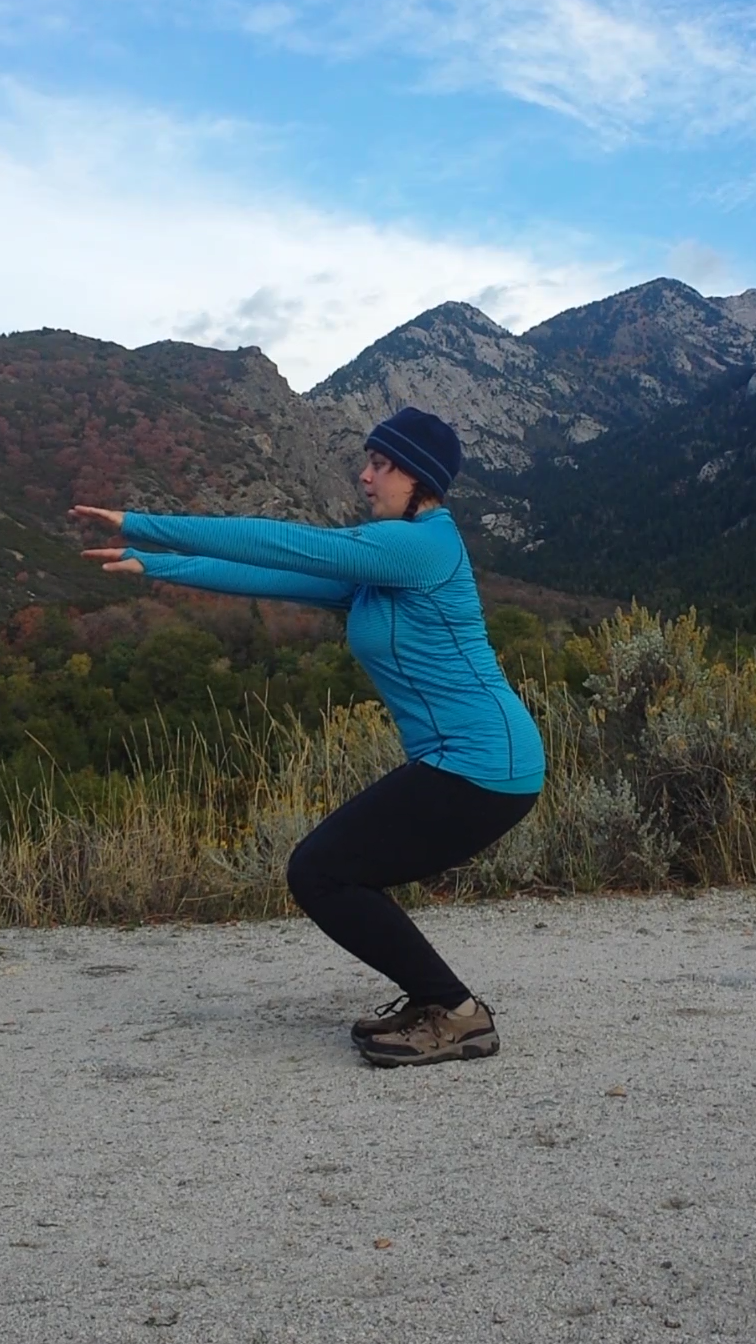
                   Skier Squats: using a medicine ball or yoga block, stand shoulder width apart at mid-line and place the object between your thighs just above the knees. Bend your knees into a sitting position keeping your center of gravity on the balls of your feet and back straight. Hold position for 2 breaths, stand then repeat.

                   Side Lunge Steps: Starting at mid-line, step your right foot out to the side with your left foot following and stepping behind and past your right foot. Step your left back out, and step the right behind and past the left. Repeat back and forth at a quick pace while maintaining full lunge.

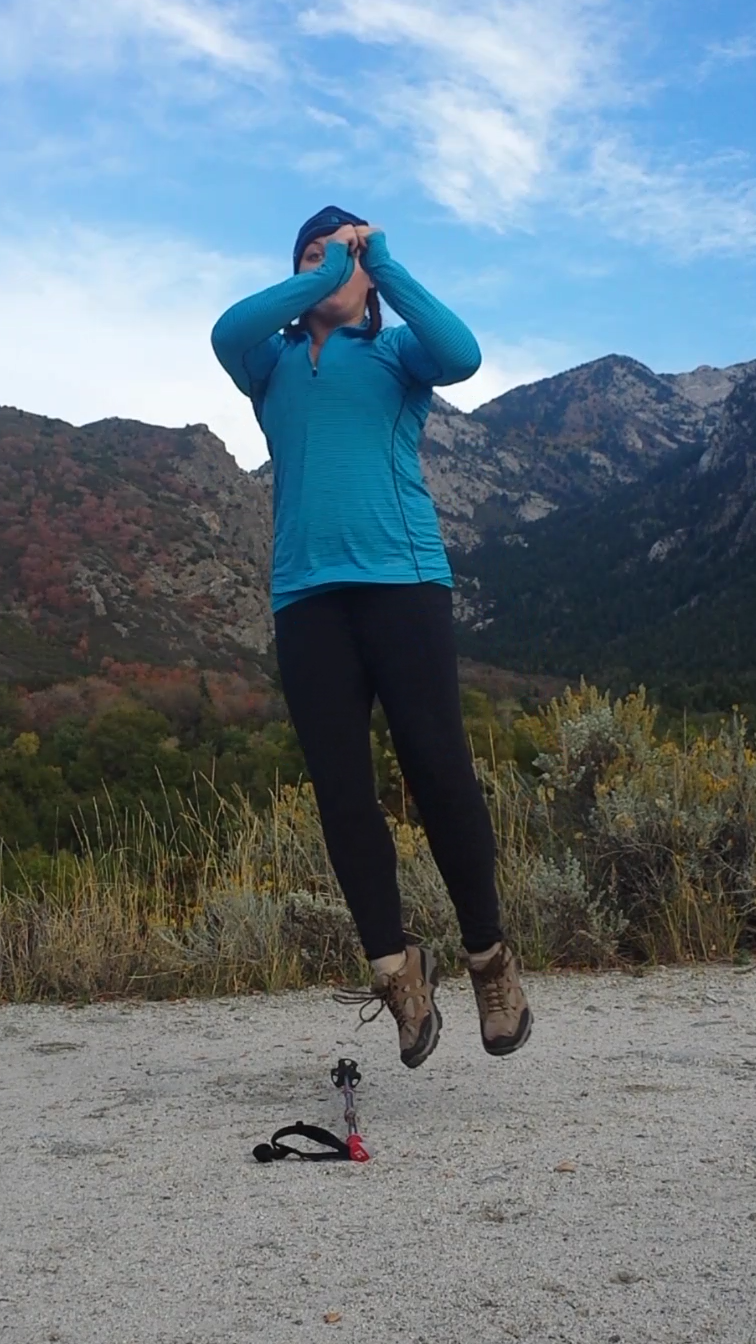
                   Mogul Hops: Starting at mid-line, hop with both feet together side to side making sure to bend your knees into a half squat to ensure soft landing. DO NOT LOCK YOUR KNEES!

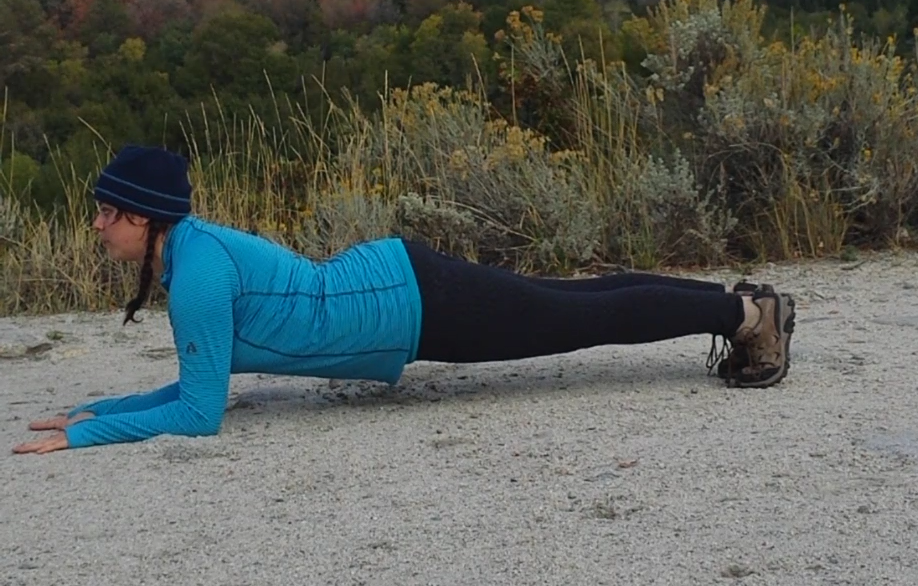
                   Plank Dips: Starting laying in the prone position, place your hands about eye level shoulder width apart. keeping your forearms on the ground press your toes into the ground and lift yourself off the ground. Keeping hips tucked under and core tight, roll your hips towards on side to the ground, return to prone mid-line and roll to the other side. Repeat side to side.

                    Skier Balance Squat: Grab your ski poles! THIS ONE IS A QUAD BURNER! This can be done with both poles, one pole or none depending on your balance, knee strength, and quad strength. Starting standing in mid-line, lift one foot off the ground in front of you. using your pole(s) as balance, squat into a sitting position keeping your foot in the air out in front of you. You might not go very low and thats ok, you don’t want to blow out your knees. Hold for two breaths, return to mid-line and switch feet. If you decide to use one pole, make sure that pole is on the same side of the body as the foot in the air.

Step 3: DON’T FORGET TO STRETCH! For your 5 minute warm-down, make sure to stretch your quads, hamstrings, calves, hip flexors, as well as anything else that needs stretching while your warming down. this will keep lactic acid from building up in your muscles and will ensure you are a limber skier.

Be sure to encompass this leg routine into your regular workout regime 2-3 times a week, for about 6 weeks prior to ski season for good conditioning.